
P.R.I.M.A.D
The University of the Cordilleras – College of Teacher Education (UC-CTE) Curriculum Development Framework
| P | rofessional Attribute |
| R | elevant Learning Pathways |
| I | mplement Curriculum |
| M | onitoring and Evaluation |
| A | udit and Review Outcomes |
| D | evelop and Update Curriculum |
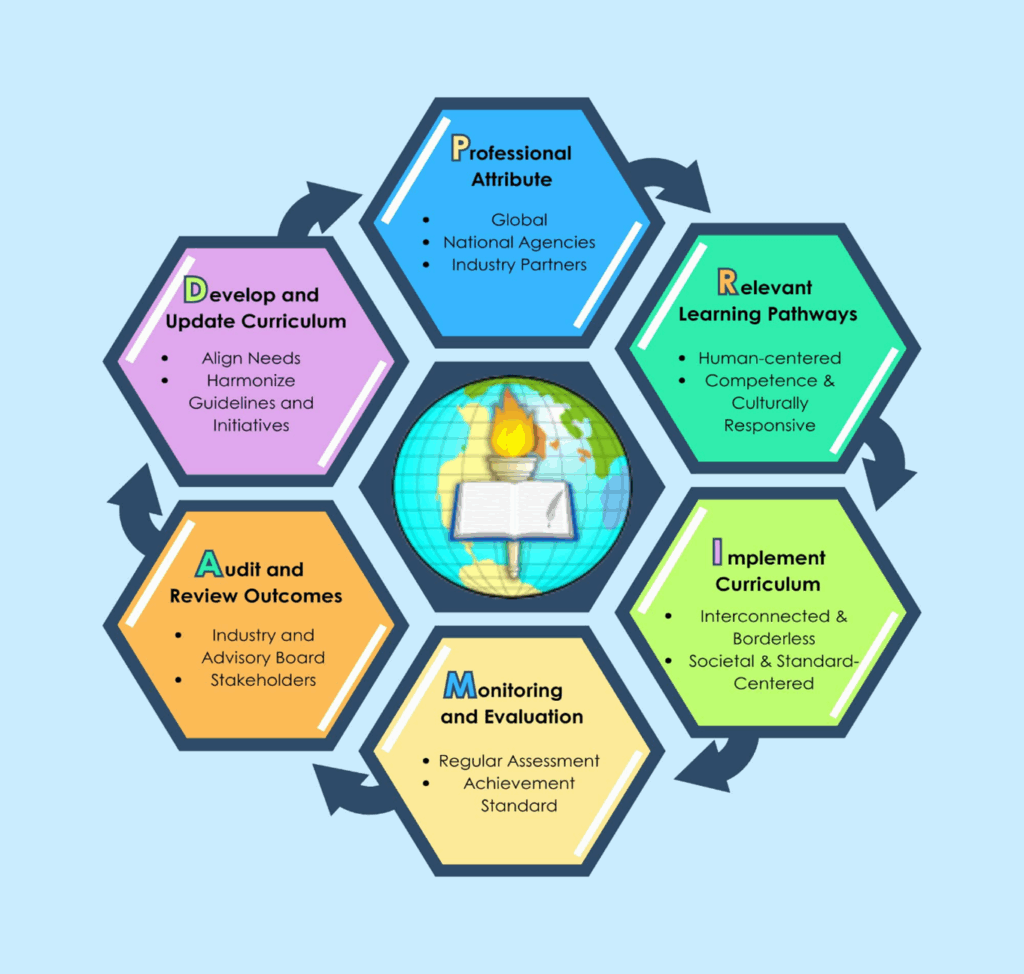
P.R.I.M.A.D. guides evidence-based curriculum design, evaluation, and continuous improvement. It provides a systematic approach to curriculum development and review, ensuring alignment with institutional goals, stakeholder needs, and national and international standards. Thus, it is guided by a clear governance structure, quality assurance cycle and academic rigor.
Authors: Dr. Donna Marie A. Oyam; Dr. Ramir S. Austria, Dr. Dante L. Caseldo
The UC-CTE Instructional Framework for Instructional Excellence
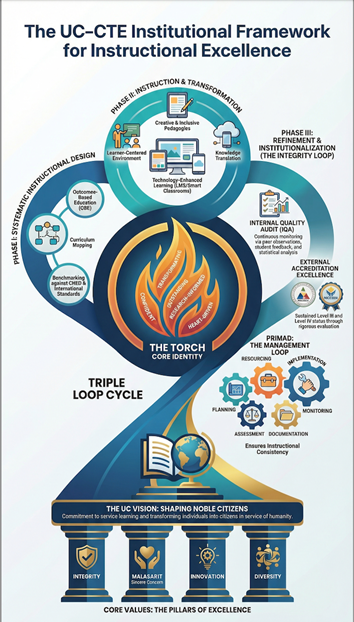
This infographic details what the UC-CTE Institutional Framework promotes and how the institution achieves it. Grounded in UC’s vision of shaping noble citizens, it promotes the institution’s core values of Integrity, Malasakit, Innovation, and Diversity, driving education that transforms learners into citizens in the service of humanity.
Author: Ms. Shayne Klarisse Eclarin-Dinaming
UC-CTE Research Agenda Framework for 2023-2028
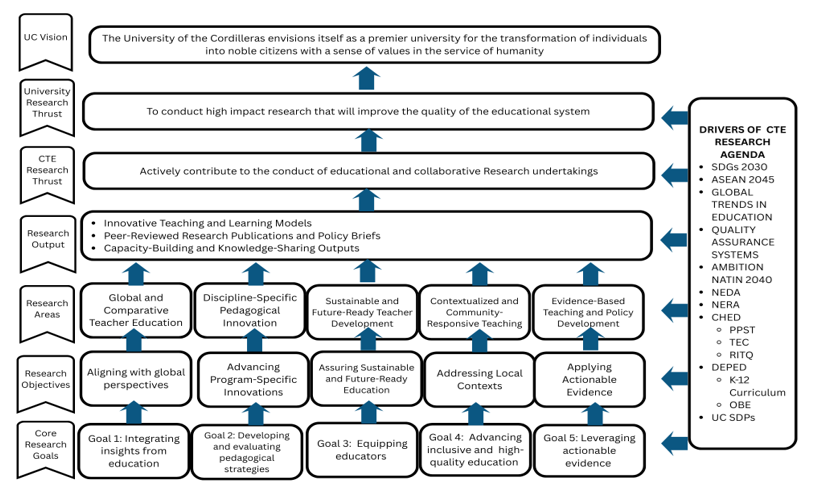
The Research Agenda of the College of Teacher Education (CTE) typically focuses on advancing educational practices, teacher training, and student outcomes through evidence-based inquiry. It emphasizes interdisciplinary approaches to address contemporary challenges in education, aligning with broader societal goals. This agenda is often structured to promote innovation in pedagogy, curriculum development, and inclusive education, while fostering collaboration between academia, policymakers, and communities. Research priorities are informed by both global frameworks and local contexts, ensuring relevance to diverse educational settings.
The agenda draws from international standards and collaborations, such as UNESCO guidelines, OECD education reports, ASEAN, and partnerships with global NGOs. It addresses universal issues like educational inequality in developing regions, the digital divide, and responses to global. Research often incorporates comparative studies across countries to identify best practices transferable to diverse contexts.
Tailored to regional needs, the agenda responds to local challenges like socioeconomic disparities, cultural diversity, and infrastructure limitations in education systems. For example, in contexts like the Philippines or similar developing nations, research prioritizes community-based solutions, indigenous knowledge integration, and policy advocacy for rural or urban education reforms. It involves stakeholders such as local governments, schools, and communities to ensure applicability, with a focus on sustainable, context-specific innovations that align with national education policies.
The College of Teacher Education’s (CTE) agenda is also tailored to specific programs ,emphasizing empirical research, policy analysis, and practical applications. Each program identifies key themes, methodologies, and outcomes, often involving mixed-methods studies (e.g., surveys, case studies, and interventions) to inform teaching practices.
Authors: Mr. Jonathan C. Iglesias; Ms. Shayne Klariss E. Dinamling
UC-CTE ADMISSION AND RETENTION POLICIES
Admission & Entry Requirements
The College of Teacher Education (CTE), recognized as a CHED Center of Excellence, is committed to welcoming students who demonstrate the interest, readiness, and potential to become effective and compassionate future educators. This admission policy outlines the standards and procedures that guide the selection of incoming freshmen to ensure a strong foundation for your teacher education journey.
A. General Eligibility
Applicants must be graduates of Senior High School (or its equivalent) and must comply with all University admission requirements. Students from all SHS strands are welcome to apply; however, those from HUMSS, GAS, or education-related tracks may find the transition to teacher education subjects more seamless.
B. Admission Requirements
- Academic Qualifications.
All applicants are expected to have:- A minimum Senior High School GWA of 80% or its equivalent.
- Satisfactory performance in key SHS subjects, particularly English,
Mathematics, Science, and Social Science.
- Entrance Assessment.
All applicants must take the University Entrance Examination, which evaluates:- Verbal and numerical skills
- Analytical thinking
- Foundational academic readiness
- Suitability to teacher education programs
- Interview and Communication Assessment.
A college interview is conducted to assess:- Motivation for pursuing the teaching profession
- Communication skills
- Professional disposition
- Readiness for the responsibilities involved in teacher training
*Applicants may also be asked to submit a written essay or provide character references when needed
C. Basis for Selection
Admission to the College is both merit-based and holistic. Applicants are
evaluated using a composite set of criteria that may include:
- SHS academic performance
- Entrance examination results
- Interview rating
- Co-curricular achievements, leadership roles, and community
involvement
Qualified applicants are admitted based on ranking and the availability
of program slots.
D. Conditional Admission
Applicants who show strong potential but require additional preparation may be granted conditional admission. This involves enrollment in bridging or enhancement courses recommended by the College. To continue in the program, students must meet the required performance level within the specified period. This policy reflects our commitment to supporting student success while upholding the academic excellence expected of a Center of Excellence.
E. Commitment to Inclusivity
The College upholds UC’s commitment to accessible and inclusive education. Applicants from diverse backgrounds—including those from public schools, geographically remote communities, indigenous cultural communities, and persons with disabilities—are encouraged to apply. Appropriate support and reasonable accommodations shall be provided in accordance with University guidelines.
F. Information, Transparency, and Review
All admission procedures, schedules, and updates are announced through official UC platforms. Policies are reviewed regularly to maintain alignment with CHED, DepEd, and Teacher Education Council standards and to ensure fairness and quality in the admission process.
RETENTION POLICY
RETENTION POLICIES of the COLLEGE OF TEACHER EDUCATION
Effective School Year 2018-2019
WHEREAS, the College of Teacher Education (CTE) offers Bachelor of Elementary Education (BEED), Bachelor of Early Childhood Education (BECED), Bachelor of Special Needs Education (BSNED), Bachelor of Physical Education (BPED), and Bachelor of Secondary Education (BSED) – major in: English, Filipino, Mathematics, Science, and Social Studies;
WHEREAS, CTE being a Center of Excellence, PAASCU accredited, training center, and all its graduates being required to take the LicensureExamination for Teachers (LET), must ensure that enrolled students are properly guided and their progress are closely monitored to help succeed in completing their degree and passing the LET;
WHEREAS, for the Licensure Examination for Teachers, the standard of the CTE is above the National Passing Rate and with 50% as the minimum passing percentage;
WHEREAS, the aptitude and skills of all CTE students can only be assured to be within the set standards through strict admission and retention policies and guidelines;
WHEREAS, with the above presuppositions, all students intending to enroll and pursue any program under CTE shall be subjected to the admission and retention policies as attached;
NOW THEREFORE, on motion made and duly seconded, be it RESOLVED, as it is hereby resolved, to approve the attached CTE admission and retention policies for implementation beginning First Trimester, School Year 2018-2019;
RESOLVED, FURTHER, that the CTE Dean, in coordination with the Department Head and Faculty Members, shall orient all new and continuing education students on the revised admission and retention policies.
APPROVED AND ADOPTED by the UC Academic Affairs Council this 2018 in the City of Baguio, Philippines
Retention Policy
- A student who will incur failing grade, unofficially dropped, or no grade in any course (Gen Ed, Prof Ed, Major) equivalent to less than 50% of the enrolled units shall be required to have promissory note and a reduction of loads for enrolment (3 units – 25% or less; 6 units – 26% – 49% failing, UD or NG) shall be applied during the first offense. If the same incident happens for the second time, student has to bring his/her parent/guardian and student shall be given last chance to enroll in the college with reduction of loads for enrolment. If this will happen for the third time, student shall be advised to shift to non-education program because he/she will no longer be admitted in CTE.
- A student who will incur failing grade, unofficially dropped, or no grade in any course (Gen Ed, Prof Ed, Major) equivalent to 50% or more of the enrolled units shall be required to bring his/her parent/guardian and student shall be given last chance to enroll in the college with reduction of loads for enrolment (6 units). If this will happen for the second time, student shall be advised to shift to non-education program because he/she will no longer be admitted in the college.
- A student who will incur failing grade, unofficially dropped, or no grade in all courses (Gen Ed, Prof Ed, Major) shall be advised to shift to non-education program because he/she will no longer be admitted in the college.
- A student who will incur failing grade, unofficially dropped, or no grade in any course (Gen Ed, Prof Ed, Major) with valid reasons shall seek the decision to be determined by the College Dean/Department Head.
ZERO UNIT POLICY
The Zero Unit Policy is implemented to ensure that students are academically prepared before enrolling in Field Study courses. Under this policy, students are not allowed to enroll in FS 101 and FS 102 unless all other required academic courses have been successfully completed. Field Study courses are application-based and require students to integrate theories, concepts, and skills learned from their general education, professional education, and specialization courses. Completing all academic requirements first allows students to engage more confidently and meaningfully in real school settings, demonstrate professional competence, and perform expected tasks effectively. Ultimately, the Zero Unit Policy helps protect students from academic overload, strengthens their readiness for practice teaching, and supports a smoother transition from coursework to authentic field experience.
Mentoring Program
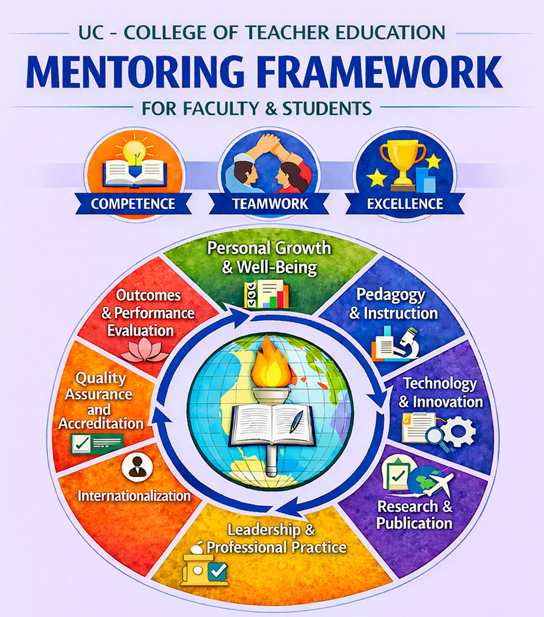
The University of the Cordilleras – College of Teacher Education Mentoring Framework institutionalizes a holistic, values-anchored system that integrates faculty and student development across eight key result areas, advancing competence, teamwork, and excellence as a Center of Excellence in Teacher Education.
Authors: Dr. Dante L. Caseldo; Dr. Ramir S. Austria
Project TAGUYOD
| T | ulong at |
| A | lalay para sa |
| G | abay, |
| U | nlad, |
| Y | akap, at |
| O | portunidad ng mga Mag-aaral na may |
| D | obleng |
| G | ampanin |
Ang TAGUYOD ay sumasagisag sa patuloy na pagtitiwala, paggabay, at malasakit ng UC-CTE sa mga mag-aaral na sabay na nag-aaral, naglilingkod, nagsasanay, at nagtatrabaho.
RSA
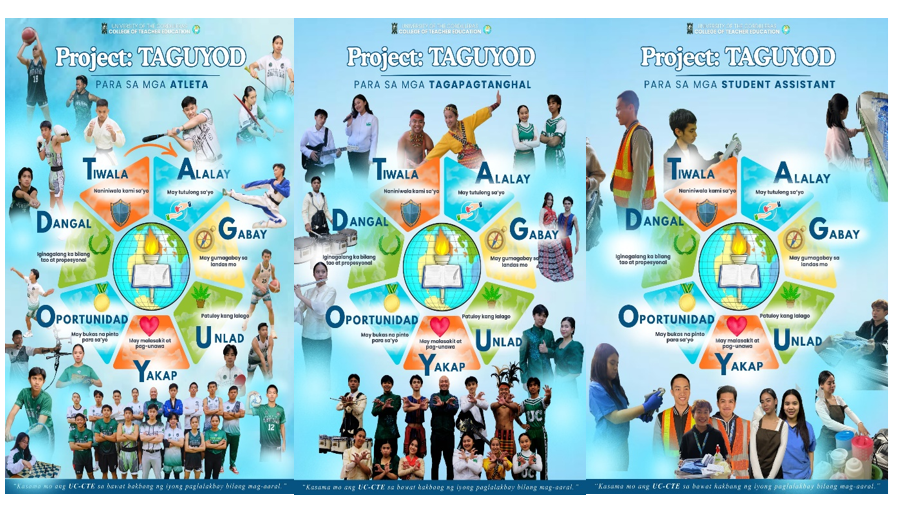
Project TAGUYOD was conceptualized in response to the growing number of students at the University of the Cordilleras – College of Teacher Education (UC-CTE) who balance multiple roles as working students, student assistants, varsity-athletes, and CCP artists/performers. While these learners demonstrate resilience, discipline, and commitment, they also face unique academic, physical, and psychosocial challenges that may affect their learning progression and well-being if left unaddressed.
Anchored on the principles of learner-centeredness, inclusivity, and outcomes-based education, Project TAGUYOD provides a holistic and structured support framework that ensures equitable access to academic opportunities without compromising academic standards. Through coordinated academic support, mentoring, wellness initiatives, and institutional accommodations, the program affirms UC-CTE’s commitment to nurturing students’ dignity, potential, and professional growth.
Ultimately, Project TAGUYOD aims to sustain student success, retention, and holistic development by ensuring that no learner is disadvantaged due to legitimate work, service, training, or performance commitments, reinforcing UC-CTE’s mission to develop competent, resilient, and socially responsive future educators.
Authors: Dr. Ramir S. Austria; Dr. Armand John P. Cantor; Dr. Danilo L. Cong-o; Dr. Peejay C. Natiola; Mr. Joshua C. Janeo
Project ACCESS
Inclusive Intervention Program for UC-CTE Students with Special Needs
| A | cademic |
| C | are, |
| C | oaching, |
| E | quity, and |
| S | tudent |
| S | upport |
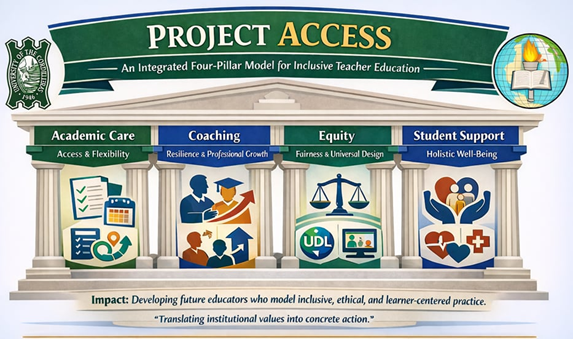
The University of the Cordilleras – College of Teacher Education (UC-CTE) grounds Project ACCESS in its core values of Integrity, Malasakit (sincere concern), Innovation, and Diversity, affirming its commitment to inclusive, equitable, and learner-centered education. With Integrity as its foundation, the College ensures that support mechanisms for students with special needs are implemented ethically, transparently, and without compromising academic standards. Guided by Malasakit, Project ACCESS reflects a culture of care and shared responsibility, providing responsive academic support and developmental guidance that upholds learner dignity and well-being.
Through Innovation, Project ACCESS adopts flexible, evidence-based, and adaptive approaches to teaching, assessment, and student support, enabling the institution to respond effectively to diverse and evolving learner needs. Embracing Diversity, the program recognizes individual differences as strengths and ensures equitable learning opportunities for students who may experience physical, medical, psychosocial, and situational barriers. In doing so, Project ACCESS not only supports student success but also models inclusive practice for future educators, reinforcing UC-CTE’s role as a values-driven institution committed to access, excellence, and social responsibility.
Authors: Dr. Ramir S. Austria; Dr. Dante L. Caseldo; Dr. Donna Marie A. Oyam;Ms. Shayne Klarisse E. Dinamling
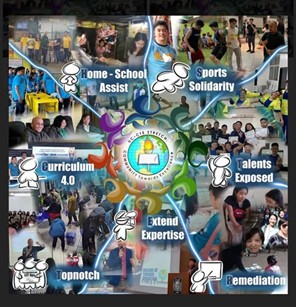
Project STRETCH
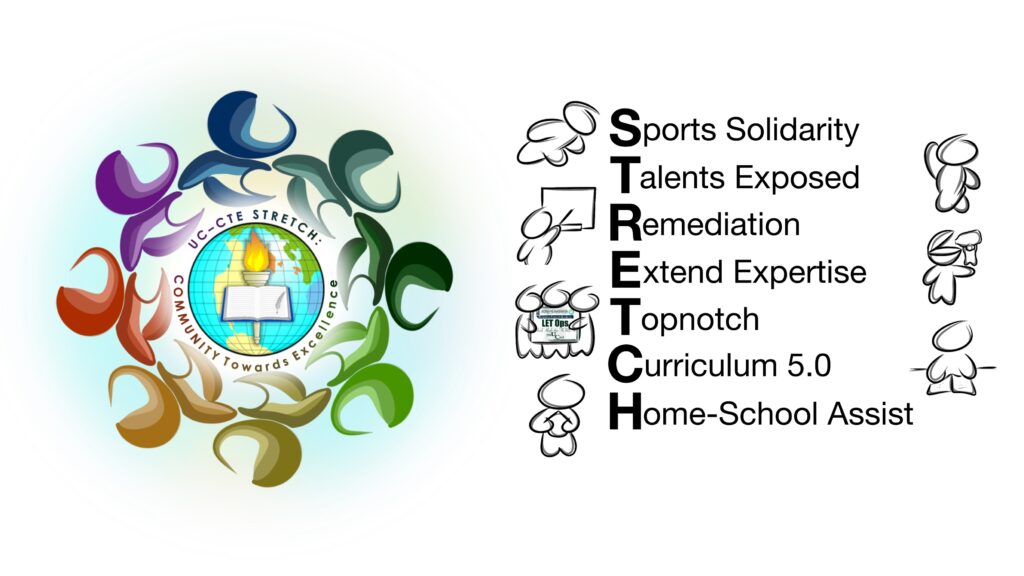
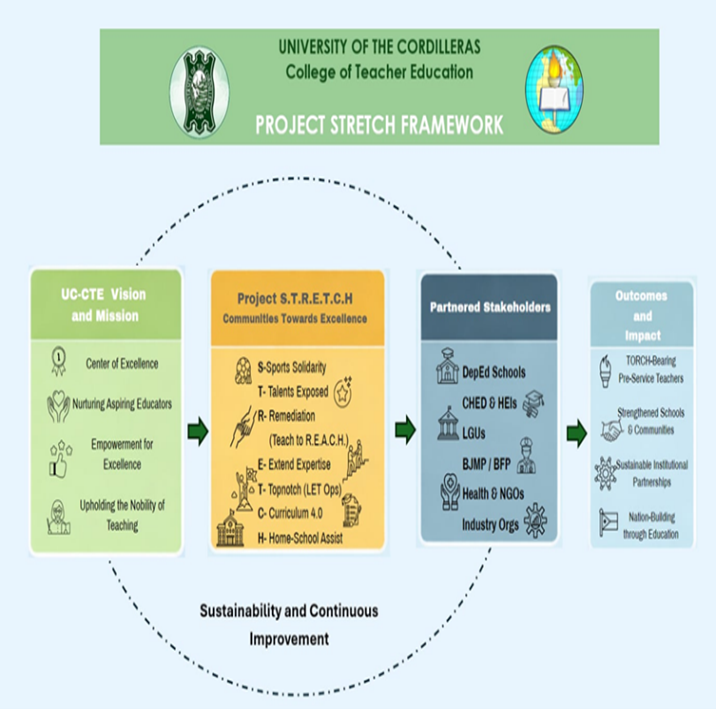
The Project S.T.R.E.T.C.H. Framework of the University of the Cordilleras – College of Teacher Education operationalizes its Vision and Mission by translating its commitment to excellence and service into structured, sustainable institutional linkages. Anchored on the development of a Center of Excellence and the formation of empowered, competent educators, the framework integrates initiatives such as remediation, talent development, LET support, curriculum innovation, and home-school engagement. These programs are implemented through strategic partnerships with various government agencies, NGOs, and industry stakeholders to ensure relevance and shared accountability. The framework generates measurable outcomes, including TORCH-bearing pre-service teachers, strengthened schools and communities, and sustained collaborative networks. Guided by quality assurance principles and continuous improvement, Project S.T.R.E.T.C.H. aligns extension and instructional initiatives with accreditation standards and institutional performance goals.